Guarding
When the body keeps protecting an area so aggressively that better movement cannot really start.
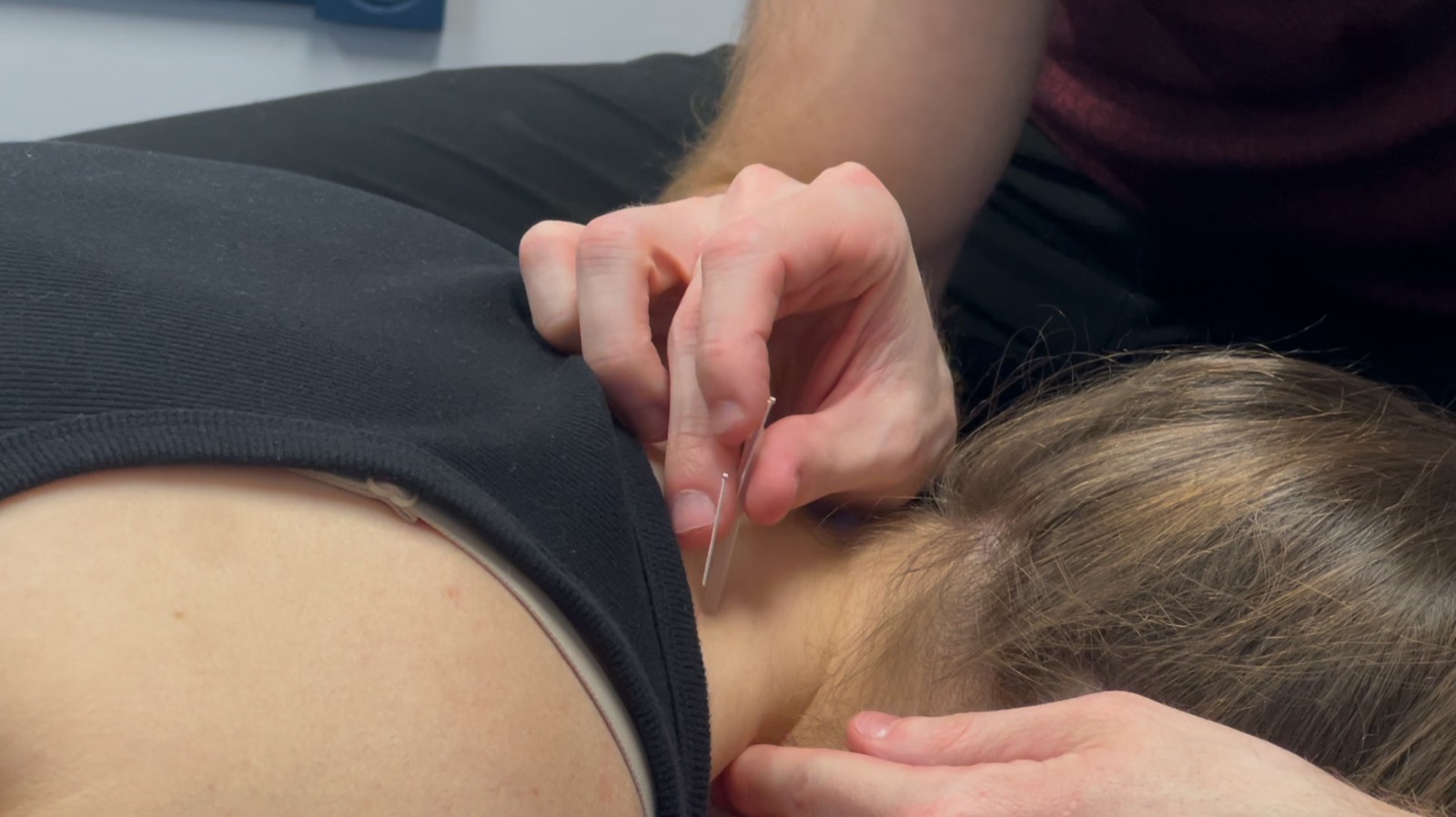
Some muscles and tendons keep limiting your training no matter what you do to them. That is not a failure of the plan — it is a tissue access problem, and a needle reaches places hands and exercise cannot. Dry needling is a clinical decision, not a default step: we use it when the assessment shows a specific structure is blocking progress that should be happening.
When the body keeps protecting an area so aggressively that better movement cannot really start.
When a tendon is still sensitive with loading and needs a more targeted input alongside rehab.
When you are improving, but one stubborn tissue still is not getting out of the way.
When a trigger point in one muscle sends pain to a completely different location, and the needle goes to the source rather than where the symptoms landed.
Commonly treated areas:
The needle looks the same. What guides its placement is different. Acupuncture is grounded in meridian theory and energetic balance. Dry needling is grounded in anatomy and musculoskeletal diagnosis: the needle goes to a specific muscle or tendon based on physical exam findings, with the goal of producing a tissue response in that structure. Different theoretical framework, different clinical indication, different target. If you have wondered whether this is the same thing by a different name — it is not.
We decide whether the muscle or tendon in front of us is actually the thing keeping progress stuck, and where anatomy says the needle needs to go.
A quick twitch, cramp, or deep ache means we hit the target: that response opens the window for the movement work that follows. Some soreness in the treated area over the next 12–24 hours is normal, a sign the tissue responded.
DNS rehab, loading, or movement work follows while the tissue is in that more responsive window. After needling, patients often notice better muscle activation, which allows for more efficient rehab.