Chiropractic Adjustments
Movement-based assessment. Targeted spinal manipulation. A method built around how your spine actually functions.
Book Now Movement-based assessment. Targeted spinal manipulation. A method built around how your spine actually functions.
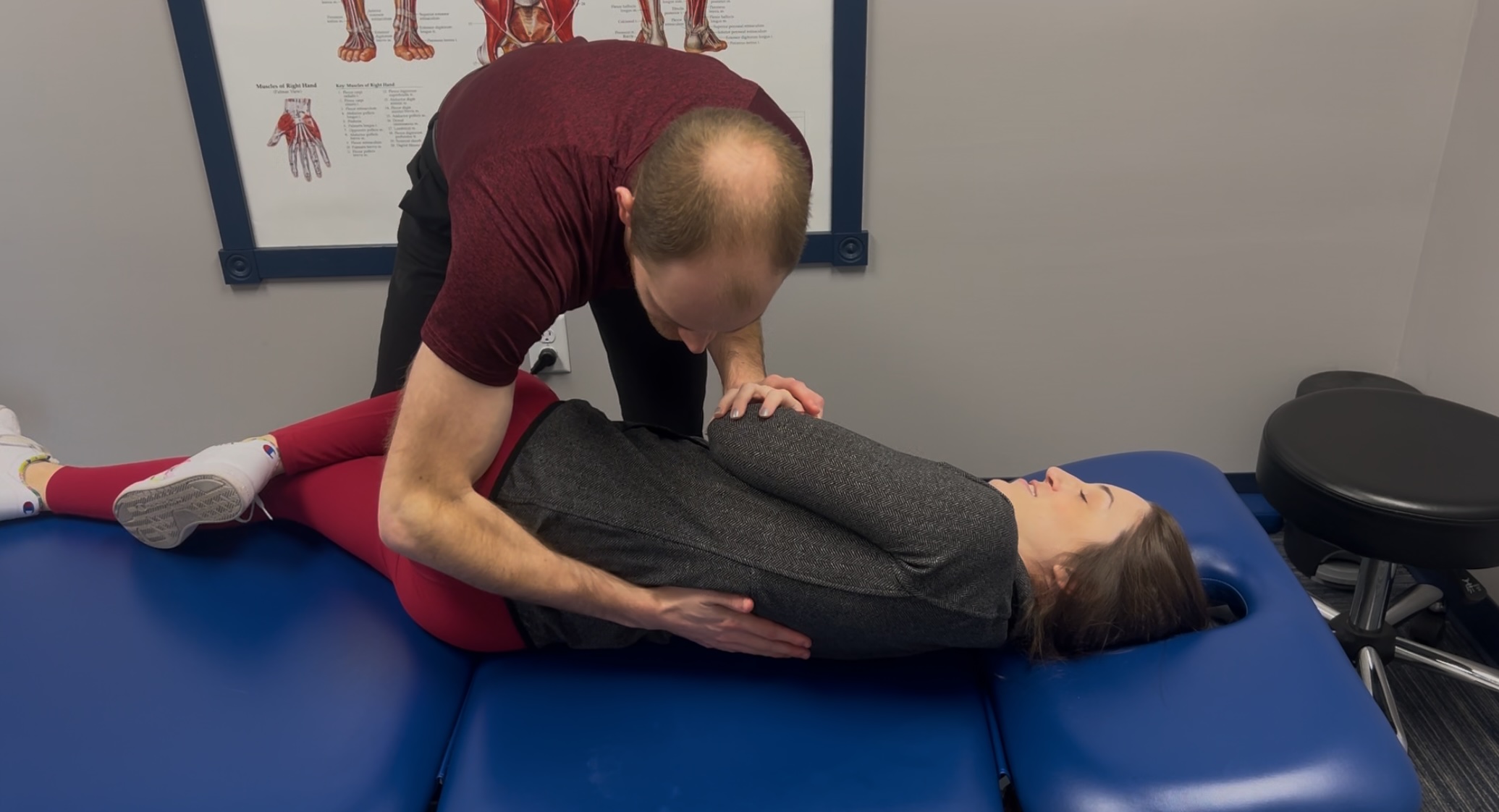
Book NowChiropractic adjustments at ARC are guided by the principles of the Motion Palpation Institute (MPI) — a dynamic assessment method that evaluates how your joints move under load and through real movement patterns, not just at rest. Most fixations don't show up on a static exam. They show up when you rotate, flex, or extend under load, which is exactly when they cause problems.
Once the assessment identifies where motion is fixated and why, spinal manipulation is applied with precision — targeted to the specific joints that aren't moving, in the directions they're not moving. The goal is restored joint mechanics, reduced pain, and better movement quality that holds up outside the clinic.
The adjustment starts with a question: which joint is the problem? Not which area hurts — which specific segment has stopped doing its job. We use Motion Palpation Institute assessment to find the answer. Rather than pressing on your spine statically, we take each segment through its end range and feel what happens. A healthy joint has a little spring to it at the limit — resistance, but some give. A fixated joint hits a hard stop. That difference, felt through motion, tells us exactly where to adjust and in which direction.
Here's what makes that matter: a fixated joint doesn't carry its share of the load. The segments above and below it compensate — moving more than they're designed to, absorbing stress that isn't theirs to absorb. That's usually where the pain shows up. The joint that hurts is often the one that's been picking up the slack for a fixated neighbor. Adjusting the symptomatic area without finding the fixation is treating the consequence while leaving the cause in place.
Once the fixated segment is identified, the adjustment is applied with directional precision — a controlled, targeted thrust specific to that joint and that direction. The pop you may hear is cavitation, gas releasing from the joint capsule. It's not the goal; restored motion is. Most patients feel a noticeable change right away — often in the same movement we used to assess the problem. Some experience mild muscle soreness in the 24–48 hours after treatment, similar to what follows a hard workout, as the surrounding tissue adapts to the mechanics shifting back toward normal.
This works for a wide range of patients — from athletes pushing load to desk workers dealing with years of accumulated stiffness to older patients who've been told to just live with it. The technique is controlled and precise, which means it can be dialed to what the patient in front of us actually needs. Comfortable doesn't have to mean ineffective.
Cervicothoracic (C7–T1)
The transition zone between the stability-oriented cervical spine and the mobility-oriented thoracic spine. The body doesn't have a clean handoff between these roles, so it defaults to stiffness at the transition — mechanically safer, but at a cost. When C7–T1 is fixated, the cervical segments above are forced to compensate, moving more than they should. Symptoms typically show up above or below: upper trap tightness, shoulder tension, recurring headaches — or that nagging ache along the inner edge of the shoulder blade that never quite goes away. The fixation sits at the junction; the pain shows up somewhere else.
Thoracolumbar (T12–L1)
The boundary between the mobility-oriented thoracic spine and the stability-oriented lumbar spine. Same principle applies: the junction between roles tends to stiffen. When T12–L1 is fixated, the lumbar segments below absorb the rotational load the thoracic spine should be handling. This is a consistent finding in mid-back pain and a common driver of dysfunction in athletes whose sports demand repeated rotation — golf, baseball, tennis, hockey. Most disc injuries in the lumbar spine happen in this neighborhood.
Lumbosacral (L5–S1)
Where the stability-oriented lumbar spine meets the sacrum — the most load-bearing transition in the spine. L5–S1 takes on more compressive and shear force than any other segment, which is why it's the most common site of disc pathology, facet irritation, and nerve root involvement. When this junction fixates, the lumbar segments above and the sacroiliac joint below are both forced to compensate. The clinical picture is usually mixed: low back tightness, hip stiffness, and referred symptoms that shift depending on what the patient has been doing.
Have questions about what an adjustment involves — whether it hurts, whether it's safe, what to expect? See our FAQ →
Book an Appointment