Some muscles get stuck. Not tight in a way that stretching fixes — stuck in a way that doesn't respond to anything. The muscle stays guarded, keeps referring pain, and holds back the rest of your recovery.
Dry needling gives us direct access to that tissue. It's one tool in the plan — not the whole plan — and it works best when combined with adjustments and active rehab.
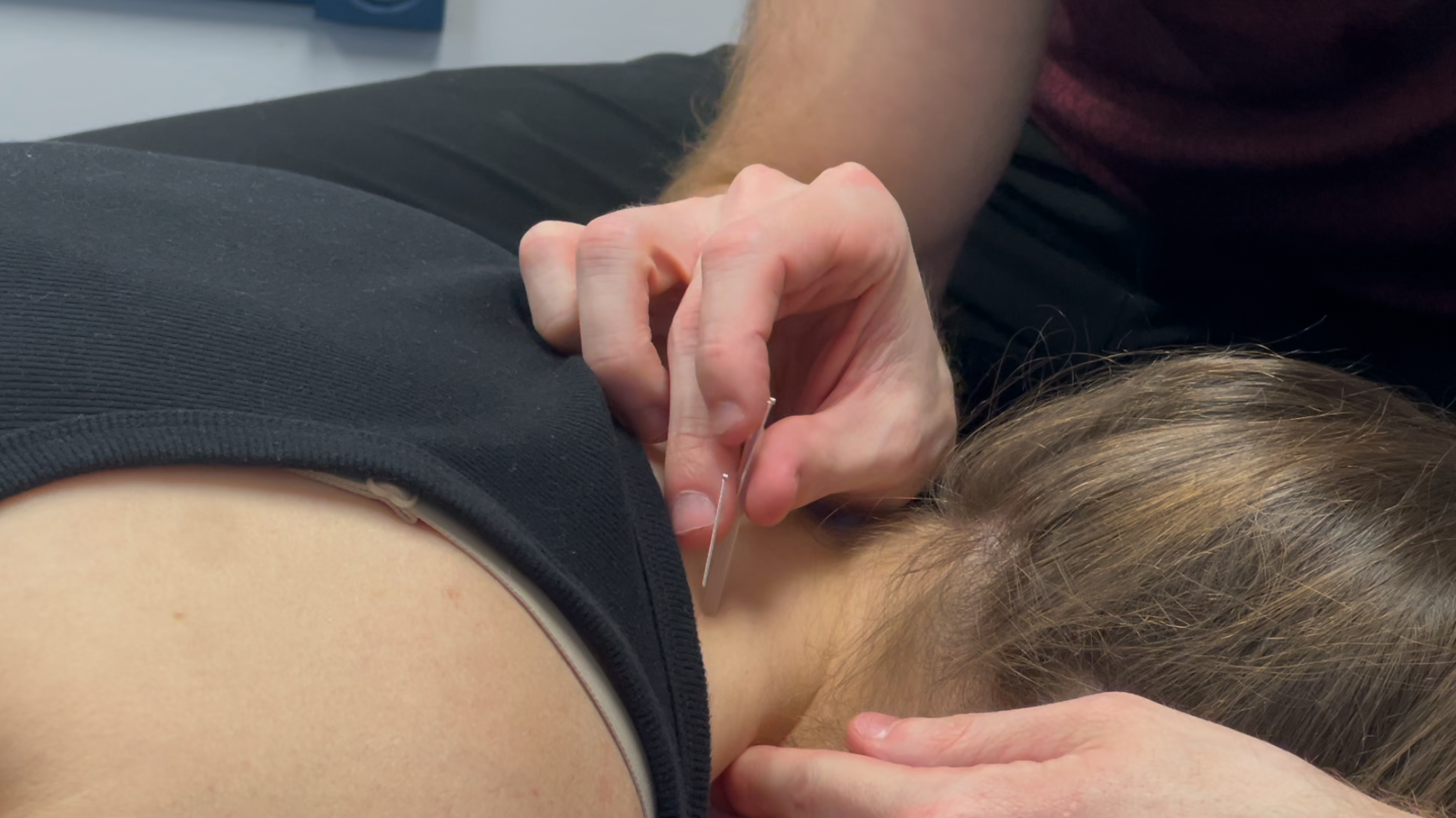
A thin, sterile needle is inserted directly into a trigger point — a hyperirritable spot in the muscle that's generating pain locally or referring it somewhere else. The needle disrupts that pattern, prompting the muscle to reset. Where other techniques work around the problem, dry needling works inside it.
It also stimulates blood flow to the treated area. This matters most in structures like tendons, which have notoriously poor circulation and heal slowly for that reason. Getting blood into those tissues is part of what makes needling effective where other approaches stall.
Dry needling uses the same type of needle, but nothing else is the same. It's based on Western anatomy, not meridian theory. Every needle placement is chosen based on your exam findings, not a fixed map.
When the needle contacts an active trigger point, you may feel a brief twitch or cramp — that's a local twitch response, and it's a good sign. It means the tissue responded. Most patients feel relief right away. You may be a little sore at the needle site for 24–48 hours afterward, similar to how a muscle feels after a hard workout — that's normal and resolves on its own.
Dry needling is performed as part of a structured treatment session, not as a standalone procedure.
Dry needling is commonly part of the plan for:
If you've been managing a muscle problem that won't fully resolve, book a visit — we'll assess whether dry needling belongs in your plan.
Book an Appointment