Functional Rehab with DNS
Most injuries don't come back because the treatment failed. They come back because the movement pattern that caused them was never addressed.
Book Now Most injuries don't come back because the treatment failed. They come back because the movement pattern that caused them was never addressed.
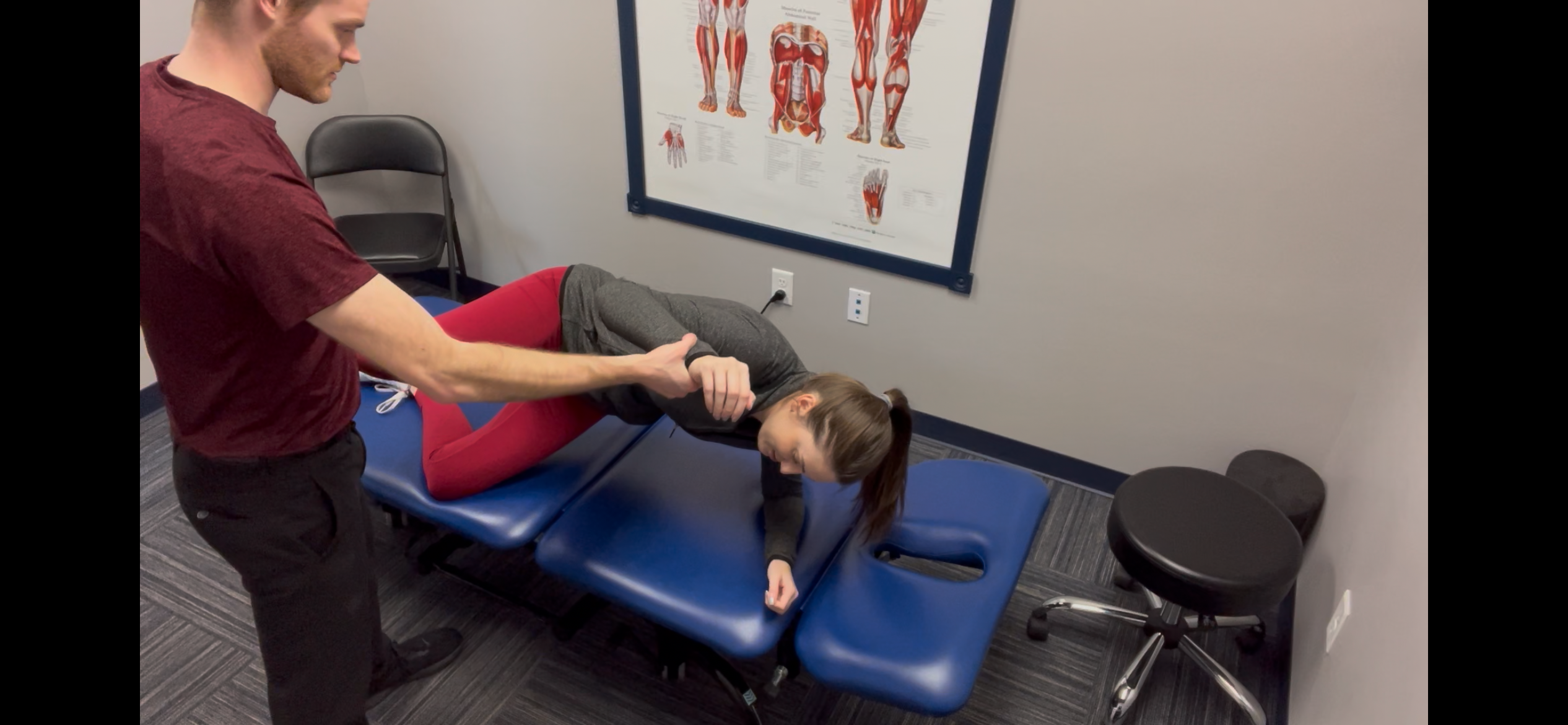
Book NowThat pattern has identifiable components. There are muscles that stopped contributing and joints absorbing load they weren't designed to handle. That combination is readable in how you move. Until you find which parts of the stabilizing system dropped out and rebuild how the joint is actually supposed to be loaded, the pattern keeps running and the compensation keeps coming back. DNS is the framework that finds it. It's both a hands-on treatment technique and the lens used to guide every assessment at this practice, so what gets treated in the session is what the exam actually found, not what seemed like the most obvious place to start.
This is not something that happens to you while you lie on a table. You'll be coached through positions, asked to breathe into specific patterns, and guided through movements that retrain coordination at a neurological level. The work you do in the session is the treatment, built from what the exam found, not a protocol pulled from a shelf.
Assessment Frameworks Used Here
Most assessments find where it hurts. This one finds what's driving it.
If a specific repeated movement causes your pain to reduce or centralize, that direction becomes both a diagnostic finding and an immediate intervention. It reshapes the treatment plan from day one. It also checks something most exams skip: a significant portion of shoulder, hip, elbow, and knee pain originates in the spine even when the spine itself is silent. Treating only the peripheral site won't hold if that's the case.
Some pain that presents as a muscle or joint problem has nerve mechanosensitivity driving part of it. Nerve sensitivity responds differently, needs different treatment, and won't resolve if it's only addressed as a soft tissue issue. This gets tested explicitly, not assumed one way or the other.
Mobility joints lock up; the stability joints above and below them absorb the extra movement instead. Pain shows up at the compensating joint (the one being asked to move too much), not at the fixated one. The assessment finds the fixation. When adjustments are part of the plan, this is what they follow from.
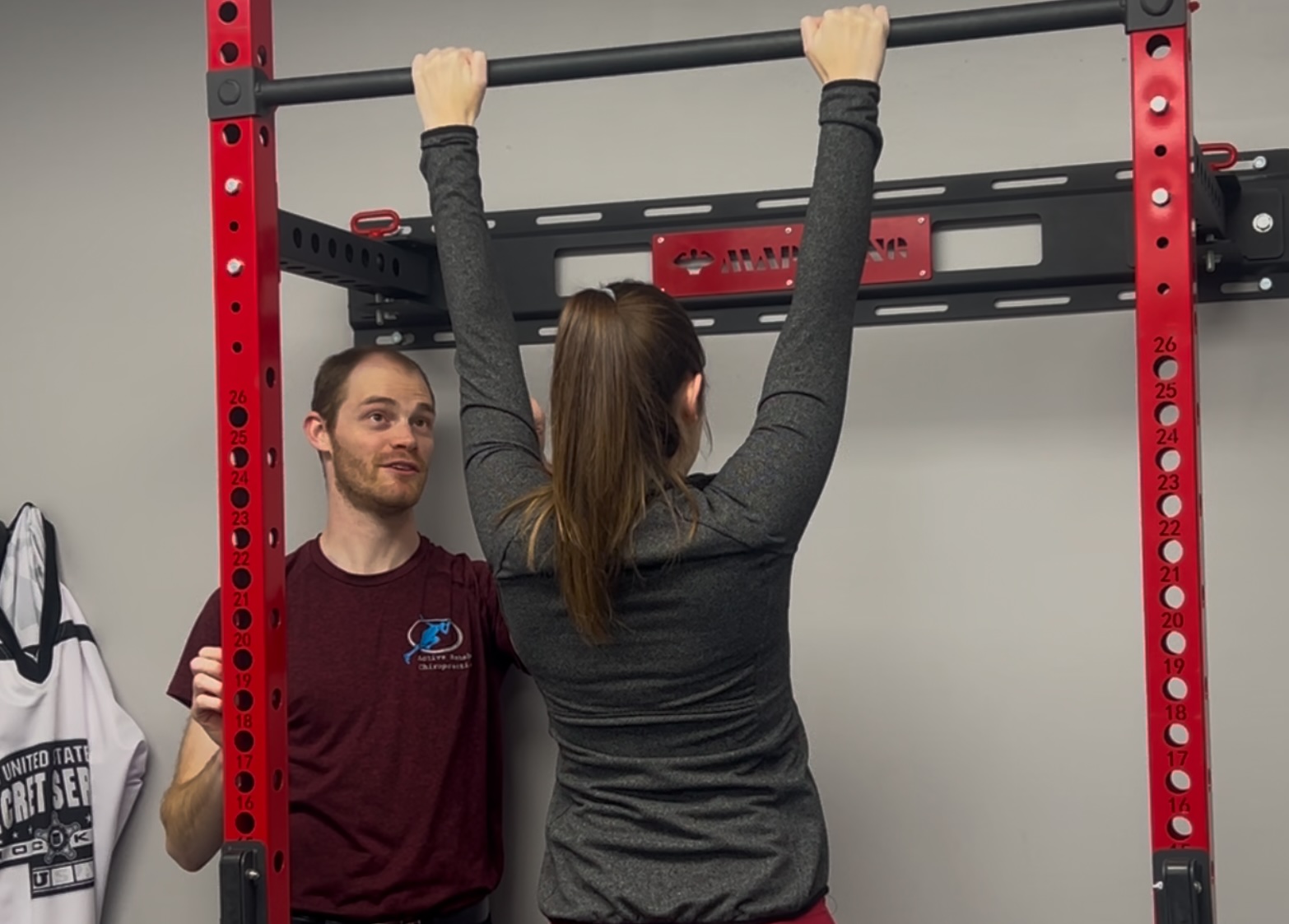
The question isn't whether you're strong. It's whether your joint stays centered under load or shifts away from it. That distinction determines the exercise prescription. Strength without the right stabilizing pattern is still a liability, and this is where the rehab programming comes from.
Once the exam identifies what's driving the problem, the rehab follows from those specific findings. Work starts in controlled, low-load positions, not out of caution, but because that's where the nervous system can actually relearn the pattern. If the stabilizing system can't hold in a simple position, it can't hold under a barbell or at full sprint. Once the pattern holds in controlled positions, we move it toward the actual demands of your sport or activity: a hockey player's hip load, a runner's single-leg mechanics, a golfer's rotational control. We move you forward as fast as the pattern allows. The work between sessions is where the pattern cements: you'll have a specific program matched to where you are in the progression, not a generic handout.
Most pain treatment works at the symptom. You hurt in a place, that place gets treated, the pain calms down. DNS works at the pattern. It asks why that place was loading wrong to begin with, tracing it back to which joints aren't stable, which muscles have gone quiet, and how your nervous system learned to compensate.
When one part of the chain isn't moving well, the joints above and below it absorb the load instead, which is why a hip problem and a back problem can be the same problem in two places. DNS assesses the whole chain, not just the address where the pain lives.
This is also why DNS is the underlying logic behind every assessment at this practice. Adjustments, soft tissue work, and dry needling all follow what the movement assessment reveals. When the pattern driving the problem gets corrected, the other treatment has somewhere to land.
If you've been treated and the same thing keeps coming back, the pattern hasn't changed yet. Book an initial visit and we'll find what's driving it.
Book Initial Visit